
The Mistake Most People Make First
Every fall, the same thing happens: a homeowner notices cold air creeping in around the garage door, grabs a roll of weatherstripping from the hardware store, and calls it winterized. It's an understandable first move. Weatherstripping is cheap, visible, and something you can knock out in an afternoon without touching anything mechanical. The problem is that sealing gaps does nothing for the parts of the door most likely to actually fail once temperatures drop and stay there. Springs, rollers, and lubricant don't care about drafts. They care about cold metal and thickened grease, and those are the things that leave you stuck with a door that won't open on the coldest morning of the year.
What Cold and Dry Air Actually Do to a Garage Door
This area doesn't just get cold, it gets big day-to-night temperature swings, dry air, and altitude sun that beats on the door all afternoon even when the air temperature is below freezing. That combination is hard on garage door hardware in a few specific ways. Metal springs and tracks contract in the cold, which changes tension and clearance. Standard lubricants thicken or go gummy at low temperatures, adding resistance right when the opener motor is already working harder. And rubber seals that were fine in August can crack or shrink once the dry air pulls moisture out of them. None of this is dramatic until the morning it is, usually as a spring that won't lift the door or a seal that's let in enough cold air to freeze condensation along the bottom panel.
Check the Springs Before They Check You
Torsion springs do most of the lifting work on a garage door, and they're also the part most likely to snap in cold weather, since the metal is less forgiving under tension when it's cold. Warning signs include a door that feels heavier than usual when lifted manually, visible gaps or stretching in the spring coils, or a loud bang from the garage (that's often a spring letting go). If your door looks like it's hanging unevenly, or one side lifts before the other, don't keep running the opener hoping it works itself out. Springs are under serious tension and aren't a safe DIY repair project.
Lubricate With the Right Product, Not Whatever's Under the Sink
WD-40 is the most common garage door lubricant in America, and also the wrong one. It's a solvent, not a lubricant, and it attracts dust while drying out fast in cold, dry air. A silicone-based or lithium-based garage door lubricant holds up much better through temperature swings. Hit the rollers, hinges, and the spring itself (lightly) before the first hard freeze, then again partway through winter if the door starts sounding rougher.
Rollers and Track Alignment
If hail dinged up the door earlier this year, check that the tracks are still straight and the rollers aren't catching on a bent section. A door that binds slightly in the track works harder every single cycle, and cold makes that friction worse, not better.
Weatherstripping and the Bottom Seal
This step still matters, just not as the whole plan. Check the bottom seal for cracking or gaps where it meets the concrete, and replace it if it's stiff or torn. A good seal keeps out drafts, meltwater, and the fine dust that blows in on dry winter days.
Opener and Backup Power
Cold weakens batteries faster, both in wall remotes and in any battery backup system on the opener. Winter storms in this area also bring power outages, so it's worth testing manually release the door and confirming the backup actually kicks in before you need it at 10pm in a snowstorm.
A Quick Pre-Winter Checklist
- Lift the door manually to feel for uneven weight or resistance
- Inspect springs for gaps, rust, or stretching
- Lubricate rollers, hinges, and springs with a cold-rated lubricant
- Check tracks for bends or debris
- Replace cracked or shrunken bottom seal
- Test the opener's battery backup and manual release
When to Call Kamas Garage Door
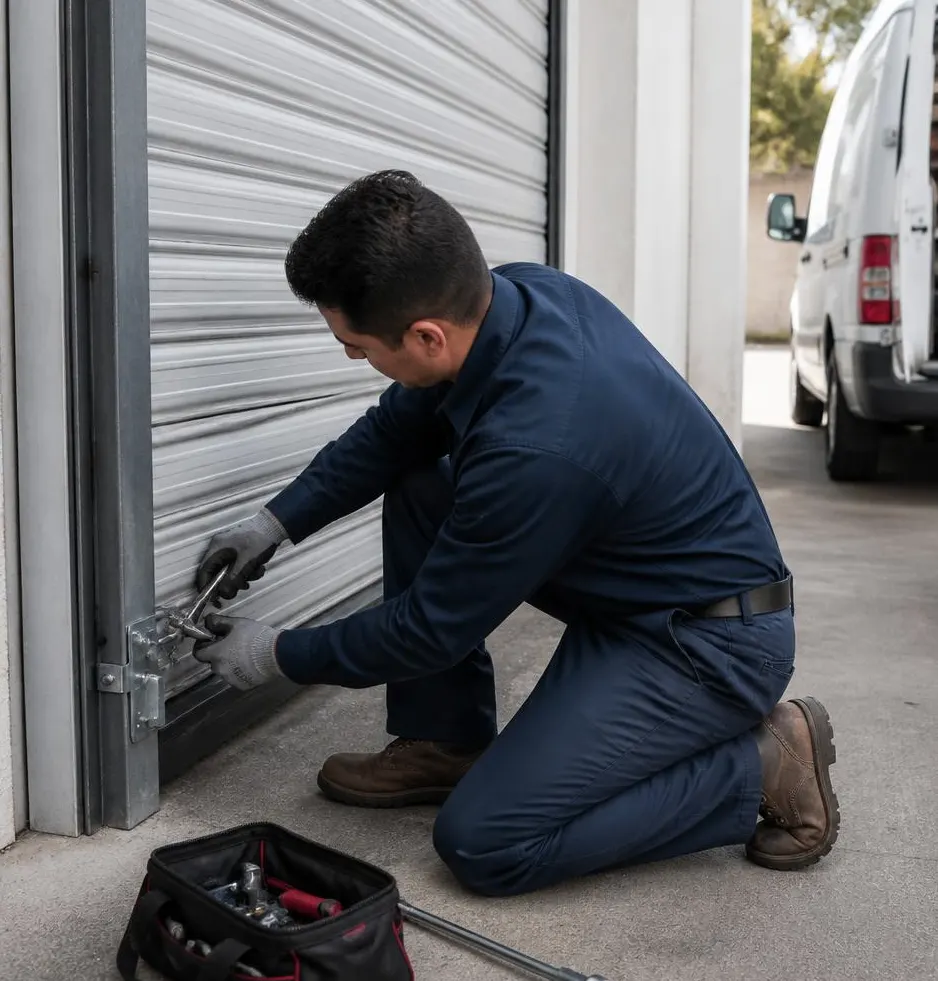
If a spring looks stretched, rusted, or uneven, or the door is noticeably harder to lift than it was last month, that's a Spring Replacement call, not a lubricant fix. And if you just want everything checked before winter really settles in, our Garage Door Maintenance visit covers the springs, rollers, tracks, and opener in one trip so nothing gets missed. We show up when we say we will, which matters more once the roads get icy.
If you're in Kamas, Oakley, Park City, Heber City, Midway, Francis, Peoa, or Samak and want your garage door checked before the next cold snap, give Kamas Garage Door a call. We'd rather catch a weak spring in November than get an emergency call in January.